Showing posts with label homer dental. Show all posts

Monday, 2 November 2015

Teeth Whitening

We at Homer Dental  will always try to show you different options when it comes to choosing what to do with your teeth.

Before and After

Most things change over time, your teeth are no different.  Today we are going to share some information about teeth whitening.  Many different factors contribute to the discoloration of our teeth. As we age our teeth change colour. This can be due to what we eat and drink or just our DNA make. Even if we brush, floss, and go for our regular checkups our teeth naturally become less bright over time.  Even environmental factors such as air quality can contribute to teeth losing their natural radiance. Professional teeth whitening is an effective way to lighten, brighten, and  eliminate  stains. We all want that naturally white smile. Nowadays teeth whitening is a common practice.  And like anything there are choices. You can either whiten your teeth at home or you can go and see your dentist to get the procedure done.  If you choose to  go to the drugstore you will find ample shelf space dedicated to tooth whitening products.  There are many over-the-counter  name brand products to choose from. However if you are unsure or squeamish about the whole at home whitening thing the best thing to do is go and speak to your dentist. Getting your teeth professionally whitened might be the best option for you.  Dentist-supervised treatments are safer and  offer more dependable results.

One thing to be aware of when whitening your teeth is that the results will vary depending on the treatment you choose.  Most people are satisfied with the outcome of their whitening treatment as the teeth become shades lighter making your smile brighter.  Most people are very pleased with their bright new smile  following the professional procedure.

The terms "whitening" and "bleaching" are often used interchangeably. However the FDA uses the term "bleaching"  to define only products that contain bleach better known as hydrogen peroxide (H2O2)/carbamide peroxide (CH6N2O3). Bleaching can lighten teeth shades beyond their natural shade state.

Teeth whitening is a common practice and a low-risk procedure today. As this is a non-invasive procedure the side effects seen are mild and rare.
Not only can whitening teeth contribute to one's overall dental health it can  also help achieve that pearly white smile that often boosts one's self confidence.

The Cost of whitening one's teeth will depend upon which type of treatment is chosen, your dentist, the duration of your treatment, and more. The Average cost of an over the counter treatment at home treatment is about $50.00. You can get cheaper but like anything the cheaper something less effective it can become hazardous. One should be aware of the levels of peroxide in each brand as that can have a damaging effect.

The take home treatments from the dentist are usually around $200 dollars. Some dentists even throw this in if you go to them for your initial procedure.  In office dentist whitening is usually between $200 and $400 a visit.  It is however the most effective and safest route to go. You are being monitored, cared for, and in the hands of trained professionals.

Each of these methods vary with risks, price, and outcome. There are different 

dentists, different brands, different cost, different teeth. All these things contribute to the

outcome and experience of teeth whitening The best thing we can say about teeth whitening

is that when done properly patients feel more confident, happy and ready to smile. They 

truly have a pearly white smile.

Tuesday, 27 October 2015

How Well do you know your teeth?


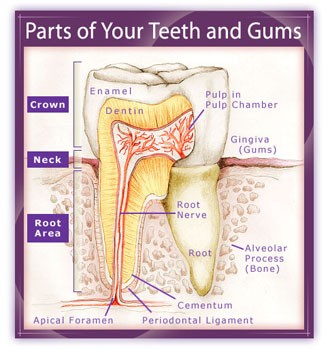
PartsTeeth- getting to know your teeth-2015-10-14.jpg
As adults, we know the value of taking care of our teeth. As children, we have to be taught not only about our teeth but why taking care of them is so important. If we were to ask people how many teeth they have many may  not be able to answer without counting. This led us to believe that we should share what we know about the tooth.


We have 32 as adults. Children have less and begin to lose them at about age six. Losing our baby teeth is a rite of passage and the first sign of growing up. Parents coo over this by saving teeth and pretending to be the tooth fairy.  We continue to lose our baby teeth into our teens. Our permanent adult teeth replace all those baby teeth we lost plus some. As adults we have 8 incisors, 4 canines, 8 premolars, and 12 molars, these include our 4 wisdom teeth.


Our teeth are the first step in the digestive process. We use all parts of our mouth to chew, cut up and begin to digest our food. Our teeth help us break apart the food and our saliva begins the process of digesting that food. Our teeth are located in our upper and lower jaw bones and are supported by gingival tissues (better known as gums). A tooth is similar to a plant; some parts you can see and some parts you can't. The part of the tooth that can be seen is called the 'crown.' It would be similar to the flower and stem of the plant. It is the viable portion of the tooth. The neck is the section between the tooth and root, it is small and located where your gums are. The root area is the remaining part of the tooth, and is the buried part of the tooth, much like a plant’s root systems. A tooth’s root system extends past the  gums and  into the jaw bone. We call these root systems or roots  the 'dental root.'


Along with these parts of the tooth, the tooth is also made up of various layers. We will go from outside in. The outer part of the crown (the part of the tooth you can see) is covered by enamel. That Enamel is a very hard substance rather like a crystal. This enamel helps protect our teeth from daily wear and tear. Just below the enamel is a layer that is softer called ‘Dentin.’ Dentin is much like bone and makes up most of our tooth. It is what gives our teeth their colour. At the core of a tooth, you will find what we call ‘Pulp.’ Inside the pulp chamber (where the pulp is located) blood vessels and nerves enter the tooth and become part of the pulp. These nerves feed the tooth nutrients which keep it alive. The last part of the tooth to mention is called ‘Apical Foramen.’ The Apical Foramen is a small opening at the top of each root which allows the nerves and blood vessels into the tooth.


We at Homer Dental believe that taking care of your teeth is a process. And the first step in that process is understanding your teeth.  


Homer Dental Center - Professional Vancouver dentists


Homer Dental Center - a Yaletown dental clinic in downtown Vancouver.


Homer Dental Center - Dental clinic in downtown Vancouver


Homer Dental Center - Professional Yaletown dentists


Homer Dental Center - Professional Vancouver dentists


Part of your Teeth and Gums
http://www.simplestepsdental.com/SS/ihtSS/r.==/st.31843/t.31883/pr.3.html
http://www.simplestepsdental.com/i/P/PartsTeeth.jpg
https://en.wikipedia.org/wiki/Remineralisation_of_teeth
https://en.wikipedia.org/wiki/Dentin